Buy مزه.com ?
We are moving the project
مزه.com .
Are you interested in purchasing the domain
مزه.com ?
domain@kv-gmbh.de · 0541-91531010
Buy مزه.com ?
What is kinematic physics?
Kinematic physics is the branch of physics that deals with the motion of objects without considering the forces that cause the motion. It focuses on describing the position, velocity, and acceleration of objects as they move through space and time. Kinematic equations are used to analyze and predict the motion of objects, and they are essential for understanding the behavior of moving bodies in various physical systems. This branch of physics is fundamental for understanding the basic principles of motion and is often a starting point for studying more complex topics in physics. **
How do you establish kinematic constraints?
Kinematic constraints are established by defining the relationships between the motion of different parts of a system. This can be done by specifying the allowable range of motion for each part, as well as any restrictions on their relative positions or velocities. Kinematic constraints can also be implemented through mathematical equations that describe the relationships between the motion variables of the system. By carefully defining these constraints, we can accurately model the behavior of the system and predict its motion under different conditions. **


Similar search terms for Kinematic
Top-Angebote
Products related to Kinematic:
-
The Handy Homestead Water Drop Disposable Dessert Plates For Snacks Appetizers And Party Serving 50pcsMake every bite feel beautifully served without the cleanup. These 50pcs disposable dessert plates feature a charming water drop shape that instantly elevates snacks, sweets, fruit, and appetizers. Designed for hosts, caterers, restaurants, and busy...41,97 $*Shipping: 0,00 $Secure redirect to the provider
-
Belleek Entertaining Tapas SetBelleek's iconic Shamrock Basketweave pattern was first introduced in the 1880s and is still produced to this day. Featuring a beautifully embossed woven texture with handpainted shamrock accents this is our most iconic and well-known pattern.65,00 $*Shipping: 0,00 $Secure redirect to the provider
-
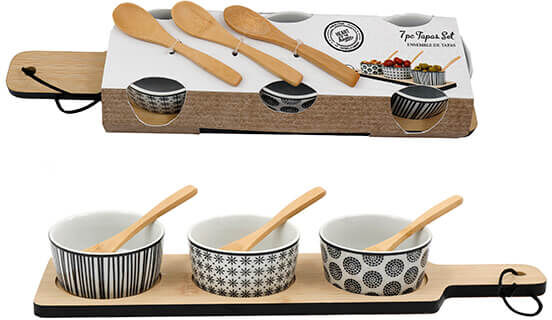
SiL 7 Piece Tapas SetThe 7 Piece Tapas Set is designed for those who enjoy entertaining. This versatile set includes glasses and serving dishes, making it suitable for various occasions, from casual gatherings to elegant soirées. Crafted from durable materials, this set is easy to clean and store, ensuring convenience for your hosting needs. It also makes a stylish gift option for friends and family. 1 year guarantee.15,00 £*Shipping: 3,50 £Secure redirect to the provider
-
Le Creuset Stoneware Tapas Dish - VolcanicLe Creuset presents the Stoneware Tapas Dish in Volcanic, perfect for serving hot and cold tapas, snacks and dips. Created from specialist clays and fired at high temperatures to ensure unmatched quality and durability, each item in the stoneware collection has an easy to clean scratch-resistant enamel coating. The perfect tapas dish for when you are entertaining at home. Product Features Tapas Dish - Volcanic Capacity: 450ml Made from high-quality stoneware Easy clean enamel coating prevents chips, scratches and does not absorb stains or odours Ideal for all tapas dishes as well as snacks and dips Other colours and products are available in the Le Creuset range Dimensions: L 17.9cm x H 4.1cm x W 15.5cm Dishwasher, microwave, oven and freezer safe 10 Year Guarantee26,00 £*Shipping: 4,99 £Secure redirect to the provider



-
How do you achieve the kinematic relationship?
The kinematic relationship can be achieved by understanding the motion and position of objects in a system. This involves analyzing the velocity, acceleration, and displacement of the objects over time. By using mathematical equations and principles of physics, such as the equations of motion and Newton's laws, the kinematic relationship can be determined. Additionally, experimental data and observations can be used to validate and refine the kinematic relationship. **
-
How do you set up kinematic constraints?
To set up kinematic constraints, you first need to identify the relationship between the objects or parts that you want to constrain. Then, you can use software tools such as CAD programs or physics engines to define the constraints based on this relationship. Common types of kinematic constraints include revolute joints, prismatic joints, and fixed joints, which restrict the motion of the objects in specific ways. By applying these constraints, you can simulate realistic movements and interactions between the objects in your system. **
-
How can one reach the kinematic relationship 3?
To reach the kinematic relationship 3, one can use the principles of kinematics to analyze the motion of objects. This involves studying the position, velocity, and acceleration of the objects and using equations and formulas to establish the relationships between these variables. Additionally, one can use graphical methods, such as velocity-time and position-time graphs, to visualize and understand the kinematic relationships. Finally, conducting experiments and collecting data can help to validate and confirm the kinematic relationships. **
-
What is the solution method for kinematic problems in physics?
The solution method for kinematic problems in physics involves using the equations of motion to analyze the motion of an object. These equations include the equations for constant velocity, constant acceleration, and projectile motion. By identifying the known and unknown variables, such as initial velocity, final velocity, acceleration, displacement, and time, we can use the appropriate equation to solve for the unknown variable. It is important to carefully consider the given information and choose the correct equation to use in order to accurately solve kinematic problems in physics. **


Can you help me with a kinematic problem in physics?
Yes, I can help you with a kinematic problem in physics. Kinematics deals with the motion of objects without considering the forces that cause the motion. If you provide me with the specific details of the problem, such as the initial and final positions, velocities, accelerations, and time, I can help you solve for the unknown quantities using the kinematic equations. Feel free to ask me any specific questions you have about the problem, and I'll do my best to assist you. **
Could someone explain or break down the transformation of this kinematic formula for me?
Sure! The kinematic formula that describes the relationship between initial velocity (u), final velocity (v), acceleration (a), and displacement (s) is given by the equation: v^2 = u^2 + 2as. This formula can be derived from the equations of motion by using the equation v = u + at and the equation s = ut + (1/2)at^2. By substituting the expression for t from the first equation into the second equation and then substituting the resulting expression for s into the equation v = u + at, we can arrive at the kinematic formula v^2 = u^2 + 2as. This formula is commonly used to solve problems involving motion under constant acceleration. **
Top-Angebote
Products related to Kinematic:
-
Shop Station Stackable Hamburger Ceramic Plate Set For Snacks, Desserts And Dips Stackable Hamburger Ceramic Plate Set For Snacks, Desserts And DipsTurn everyday serving into something guests will remember with this playful hamburger ceramic plate set. Designed to stack into an eyecatching burger shape, it brings personality to your table while keeping individual serving pieces conveniently...84,97 $*Shipping: 0,00 $Secure redirect to the provider
-
Kozy Kitchen Organic Bamboo Platter, Serving Platter, Sectional Wooden Dish For Appetizers & SnacksThis wooden appetizer tray is made of 100% organic bamboo. It's Eco-friendly and stylish design gives a lovely sense to your party tables. No matter if it's in your kitchen, office, yard, picnic, party, vacation, barbecue or some other special events!32,49 $*Shipping: 0,00 $Secure redirect to the provider
-
The Handy Homestead Water Drop Disposable Dessert Plates For Snacks Appetizers And Party Serving 50pcsMake every bite feel beautifully served without the cleanup. These 50pcs disposable dessert plates feature a charming water drop shape that instantly elevates snacks, sweets, fruit, and appetizers. Designed for hosts, caterers, restaurants, and busy...41,97 $*Shipping: 0,00 $Secure redirect to the provider
-
Belleek Entertaining Tapas SetBelleek's iconic Shamrock Basketweave pattern was first introduced in the 1880s and is still produced to this day. Featuring a beautifully embossed woven texture with handpainted shamrock accents this is our most iconic and well-known pattern.65,00 $*Shipping: 0,00 $Secure redirect to the provider
-
What is kinematic physics?
Kinematic physics is the branch of physics that deals with the motion of objects without considering the forces that cause the motion. It focuses on describing the position, velocity, and acceleration of objects as they move through space and time. Kinematic equations are used to analyze and predict the motion of objects, and they are essential for understanding the behavior of moving bodies in various physical systems. This branch of physics is fundamental for understanding the basic principles of motion and is often a starting point for studying more complex topics in physics. **
-
How do you establish kinematic constraints?
Kinematic constraints are established by defining the relationships between the motion of different parts of a system. This can be done by specifying the allowable range of motion for each part, as well as any restrictions on their relative positions or velocities. Kinematic constraints can also be implemented through mathematical equations that describe the relationships between the motion variables of the system. By carefully defining these constraints, we can accurately model the behavior of the system and predict its motion under different conditions. **
-
How do you achieve the kinematic relationship?
The kinematic relationship can be achieved by understanding the motion and position of objects in a system. This involves analyzing the velocity, acceleration, and displacement of the objects over time. By using mathematical equations and principles of physics, such as the equations of motion and Newton's laws, the kinematic relationship can be determined. Additionally, experimental data and observations can be used to validate and refine the kinematic relationship. **
-
How do you set up kinematic constraints?
To set up kinematic constraints, you first need to identify the relationship between the objects or parts that you want to constrain. Then, you can use software tools such as CAD programs or physics engines to define the constraints based on this relationship. Common types of kinematic constraints include revolute joints, prismatic joints, and fixed joints, which restrict the motion of the objects in specific ways. By applying these constraints, you can simulate realistic movements and interactions between the objects in your system. **
Similar search terms for Kinematic
-
SiL 7 Piece Tapas SetThe 7 Piece Tapas Set is designed for those who enjoy entertaining. This versatile set includes glasses and serving dishes, making it suitable for various occasions, from casual gatherings to elegant soirées. Crafted from durable materials, this set is easy to clean and store, ensuring convenience for your hosting needs. It also makes a stylish gift option for friends and family. 1 year guarantee.15,00 £*Shipping: 3,50 £Secure redirect to the provider
-
Le Creuset Stoneware Tapas Dish - VolcanicLe Creuset presents the Stoneware Tapas Dish in Volcanic, perfect for serving hot and cold tapas, snacks and dips. Created from specialist clays and fired at high temperatures to ensure unmatched quality and durability, each item in the stoneware collection has an easy to clean scratch-resistant enamel coating. The perfect tapas dish for when you are entertaining at home. Product Features Tapas Dish - Volcanic Capacity: 450ml Made from high-quality stoneware Easy clean enamel coating prevents chips, scratches and does not absorb stains or odours Ideal for all tapas dishes as well as snacks and dips Other colours and products are available in the Le Creuset range Dimensions: L 17.9cm x H 4.1cm x W 15.5cm Dishwasher, microwave, oven and freezer safe 10 Year Guarantee26,00 £*Shipping: 4,99 £Secure redirect to the provider
-
Cadac Tapas Dishes Set of 4Cadac Tapas Dishes - The Set of 4 That Will Revolutionise Your Campsite Breakfasts - Ceramic GreenGrill BBQ Mini Dishes Four individual ceramic-coated tapas dishes for your Cadac Dometic BBQ and cooking needs. With these dishes, you can cook up a storm : eggs, pancakes, beans, and even bacon - all at the same time, in their own dedicated dish. Easy to clean and easy to serve straight from the BBQ - perfect for a hassle-free campsite morning. Some of the best campsite cooking happens in those little dishes on the BBQ, and the Cadac Tapas Dishes Set of 4 really takes it to the next level. A Saturday morning just got a whole lot more interesting. Eggs in one, bacon in another, beans in a third, and pancakes in the fourth - four dishes full of goodies, all cooking away on the BBQ at the same time. And the best bit? Everything lands on your plate hot, at19,99 £*Shipping: 5,00 £Secure redirect to the provider
-
Le Creuset Stoneware Tapas Dish - Black OnyxLe Creuset presents the Stoneware Tapas Dish in Black Onyx, perfect for serving hot and cold tapas, snacks and dips. Created from specialist clays and fired at high temperatures to ensure unmatched quality and durability, each item in the stoneware collection has an easy to clean scratch-resistant enamel coating. The perfect tapas dish for when you are entertaining at home. Product Features Tapas Dish - Black Onyx Capacity: 450ml Made from high-quality stoneware Easy clean enamel coating prevents chips, scratches and does not absorb stains or odours Ideal for all tapas dishes as well as snacks and dips Other colours and products are available in the Le Creuset range Dimensions: L 17.9cm x H 4.1cm x W 15.5cm Dishwasher, microwave, oven and freezer safe 10 Year Guarantee26,00 £*Shipping: 4,99 £Secure redirect to the provider
-
How can one reach the kinematic relationship 3?
To reach the kinematic relationship 3, one can use the principles of kinematics to analyze the motion of objects. This involves studying the position, velocity, and acceleration of the objects and using equations and formulas to establish the relationships between these variables. Additionally, one can use graphical methods, such as velocity-time and position-time graphs, to visualize and understand the kinematic relationships. Finally, conducting experiments and collecting data can help to validate and confirm the kinematic relationships. **
-
What is the solution method for kinematic problems in physics?
The solution method for kinematic problems in physics involves using the equations of motion to analyze the motion of an object. These equations include the equations for constant velocity, constant acceleration, and projectile motion. By identifying the known and unknown variables, such as initial velocity, final velocity, acceleration, displacement, and time, we can use the appropriate equation to solve for the unknown variable. It is important to carefully consider the given information and choose the correct equation to use in order to accurately solve kinematic problems in physics. **
-
Can you help me with a kinematic problem in physics?
Yes, I can help you with a kinematic problem in physics. Kinematics deals with the motion of objects without considering the forces that cause the motion. If you provide me with the specific details of the problem, such as the initial and final positions, velocities, accelerations, and time, I can help you solve for the unknown quantities using the kinematic equations. Feel free to ask me any specific questions you have about the problem, and I'll do my best to assist you. **
-
Could someone explain or break down the transformation of this kinematic formula for me?
Sure! The kinematic formula that describes the relationship between initial velocity (u), final velocity (v), acceleration (a), and displacement (s) is given by the equation: v^2 = u^2 + 2as. This formula can be derived from the equations of motion by using the equation v = u + at and the equation s = ut + (1/2)at^2. By substituting the expression for t from the first equation into the second equation and then substituting the resulting expression for s into the equation v = u + at, we can arrive at the kinematic formula v^2 = u^2 + 2as. This formula is commonly used to solve problems involving motion under constant acceleration. **
* All prices are inclusive of VAT and, if applicable, plus shipping costs. The offer information is based on the details provided by the respective shop and is updated through automated processes. Real-time updates do not occur, so deviations can occur in individual cases. ** Note: Parts of this content were created by AI.